Showing posts with label Inspiration. Show all posts

Sunday, March 24, 2019

Dr. Shari Daniels: Whatever It Be

My notebooks are in a constant state of growing and changing, layers of me evolving right alongside them. Early notebooks began as diaries and emotional purging mediums, of which I penned much ink during those high school and college years back in the 1980’s. As my children arrived, snippets of their silliness and precious moments I didn’t want to forget were peppered between entries that contained my hopes and dreams as a young mother and wife. I realized early on that my notebook housed what was close to my heart.

(Click to Enlarge Image)

Some twenty years later, Julie Cameron’s book, The Artist’s Way, would prompt a shift in my notebook writing, and morning pages were born. As a ritual, each morning still, three pages of whatever shows up finds its way to the notebook with the intention to hear the whispers of my soul and receive guidance for the day. I learned to recognize patterns of whining and emotional drama and discovered that writing in my notebook could pull me out of the sludge; sometimes an anchor, sometimes a buoy. And: what I put my attention towards shaped my life.

Later yet, as a newly minted literacy coach being trained at OSU, I was introduced to Ralph Fletcher, Georgia Heard, and Donald Graves, and a new layer of transformation took place. The concept that a notebook is a treasure box housing precious gems, random threads, and collectables to one day grow into something more: a story, a poem, or a book, was my new mantra. Now I was not just writing for myself, but with the possibility that I could go shopping in my notebook for any topic that calls to me, play with it, write deeper into and around it or reshape it for the public. 

I turned into a "story-catcher," living wide awake for any remnant to be safeguarded in the notebook: an image, dialogue of another (especially my husband - the sharp witted man he is), a random wonder or text message. The world became fodder for my notebook.

(Click to Enlarge Image)

In the last 5-10 years, my notebooks evolved once again, as they screamed for creativity and meaning. The work of Lynda Barry, Lisa Swerling, Debbie Ridpath Ohi, Leah O’Donnel, and Sunni Brown,  Austin Kleon, dozens of children’s authors and Amy of course, inspire the poetry and drawings, doodles and silliness that now pervades my notebooks. I’ve added art journaling, Instagram images, and visual storytelling to be more playful in this space. Mary Oliver’s words to “Pay Attention ~ Be Astonished ~ and Tell About It” feed purpose into my devotion to adding more ink on the page. In a world of “un-noticers”, being one who “makes alertness a hidden discipline of familiarity” (as David Whyte words depict) feels like a special gift I have been granted. 

(Click to Enlarge Image)

My notebooks, for me, and for others I’ve spoken to, have led me to a discovery and documentation of who I am. Following the threads of which I collect, to a larger meaning unearths the hidden treasures of which I learn from and see new perspectives. Words revealed are guidance, often medicine for healing, and quite frankly, just a sweet bliss upon the surprise of the next line. Once that essence is tasted and experienced, it becomes a necessary nourishment for the feeding of my soul.

Invitation (I love “invitations” ~ borrowing the word from Donald Graves and Julia Cameron):

Writing has taught me to live with a sense of presence and awareness of anything that aspires or inspires, creates a sense of wonder, and for what surprises me, shocks me, and disturbs the core of my being. Cultivating a new lens for "seeing" is the first habit of mind for living this writerly life.

So, listen to a podcast for words that abduct you, snap the photo of a tweet that calls your name and Paparang it (I'm in love with this new little gadget I bought myself), writing from it to see where it takes you, capture a sentence overheard from your children, or learn to doodle people and make speech bubbles as the thoughts and words.  Whatever it be, capture it.  Be a witness to the threads of stories around you.

If you are just beginning to cultivate a sense of awareness and need a scaffold, I’ve revised Lynda Barry’s tool for paying attention and found it is a good “starter” in teaching the eyes and ears what to look for. Each snippet saved can later be lifted to explore your way into a story to find meaning or some Universal Truth. It’s a lovely strategy in which the only requirement is that you put down your phone and live wide awake in this world.

(Click to Enlarge Image)

Because, the world is waiting for you. Our lives will pass us by and we will wonder how we spent our days and who we were. Pull out the net and do some capturing of all those sweet butterflies.

Thank you so much to Amy for inviting me to share my notebooks. Digging into my neglected blogging space to share past scribbles with you has made me realize how much I miss blogging and a writing community.  New nudges are being stirred to venture down some untraveled paths.

Shari 😊


Dr. Shari Daniels has taught for 25 years in a variety of roles: kindergarten teacher, first grade teacher, third grade teacher, and literacy coach. After literacy coach training at OSU, she felt a calling to graduate school and earned her PhD in Teaching and Learning. Currently, she is an assistant professor teaching preservice teachers at the University of Minnesota in Crookston. Shari is mother of four amazing children who are all following their callings in the world of adulting, grandma to Grayson, who is 2 and 1/2, with a sibling on the way, and wife to her high school sweetheart of 30 years. She hopes to one day live out on a plot of land in the country, with a couple small writing shacks scattered about and maybe raise llamas. She will probably will wear purple.

Sharing Our Notebooks is offering a giveaway of a book Shari recommends - POEMCRAZY by Susan G. Wooldridge - for a reader of this post. Please leave a comment by 11:59pm on Sunday, April 7 to be entered into this random drawing.  Please be sure to leave a way to contact you as part of your comment.


Please know that Sharing Our Notebooks welcomes all kinds of notebook keepers - of any age and interest - to open up their pages and share their process.  At the present time, I am accepting all notebook entries and am especially hoping to receive more entries from boys and men who keep any kind of notebooks.  If you are interested in writing in this space, please contact me, Amy, directly.

Please share a comment below if you wish.

Friday, October 27, 2017

I Have Lived: Julie Patterson

Notebook as Collection Bin, Inspiration

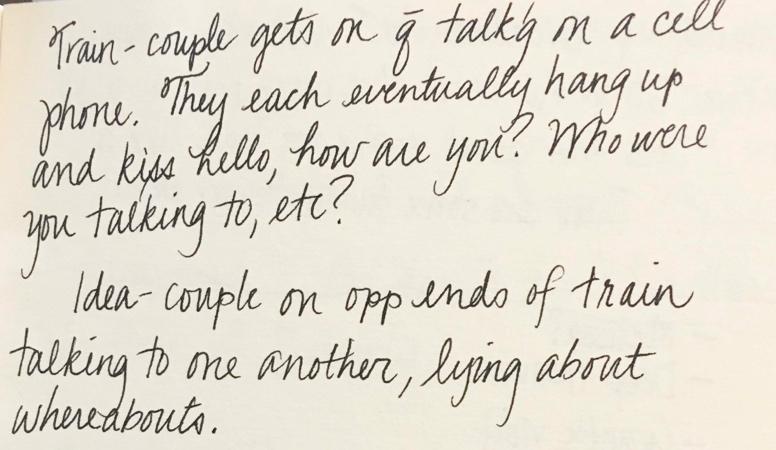
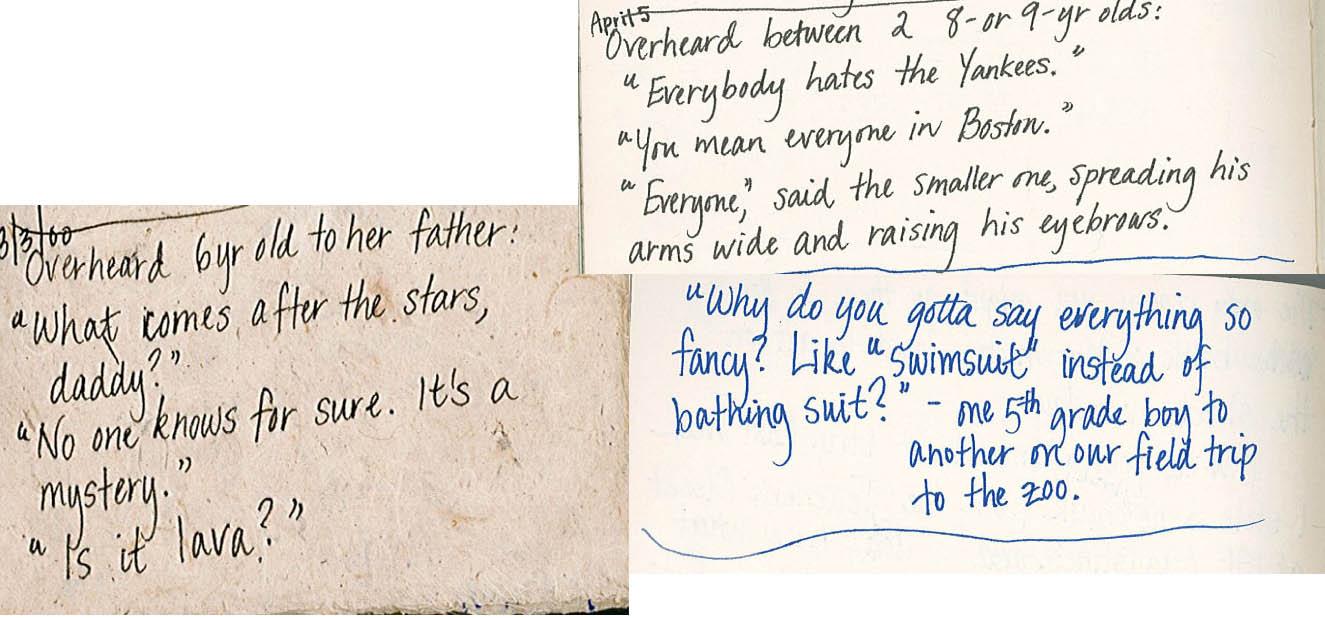
I collect ideas for stories, essays, and poems in my notebooks in much the same way that young kids stash curiosities and beautiful (to the beholder) objects in their pockets. Entries are like snapshots of moments I don't want to forget—perhaps literally images but also dialogue, questions, observations, character sketches.

There's no intentional organization in my notebooks, though you can sometimes see common threads in entries. For example, you might see a lot of dialogue from children in a date range that corresponds to work on stories with kids as main characters:

IPYW/Excerpts%20Julie's%20notebooks/dialogue%20collage.jpg


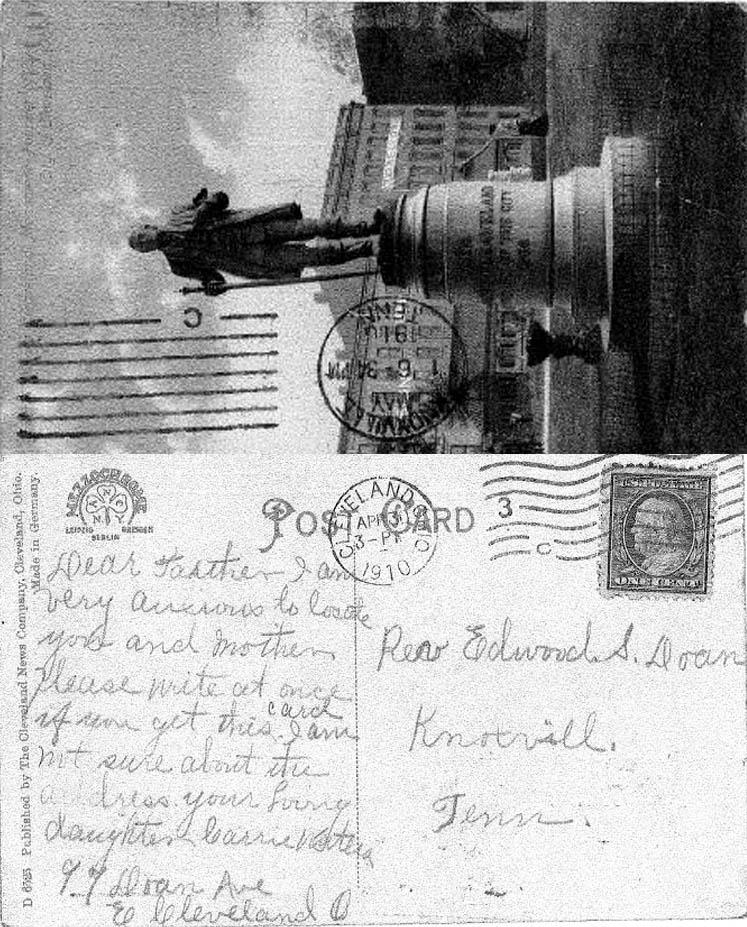
I found the below 1910 postcard in an antique store and couldn't stop daydreaming about what it meant: Dear Father, I am very anxious to locate you and mother. Please write at once if you get this. I am not sure about the address. Your loving daughter. A daughter anxious to locate her parents, her father a Reverend...why are they separated and the parents' whereabouts unknown? 

IPYW/Excerpts%20Julie's%20notebooks/postcard.jpg

I thumb through my notebooks for story starters when I feel I have nothing to write about, or want a break from an oppressive work-in-progress, or just want to remember why I write. I have plenty of short entries that have never been developed into anything more, and many that probably never will. The point of the notebook, for me, isn’t only to gather material but also to live a mindful life and simply notice things. My notebook is evidence that I have lived and thought about things. Notebook as Incubator
Stories and essays cook inside my notebooks, too. I brainstorm, recall memories, attempt to answer questions. I create early drafts, dig deeper into topics after I get feedback from peers, and experiment with revisions.

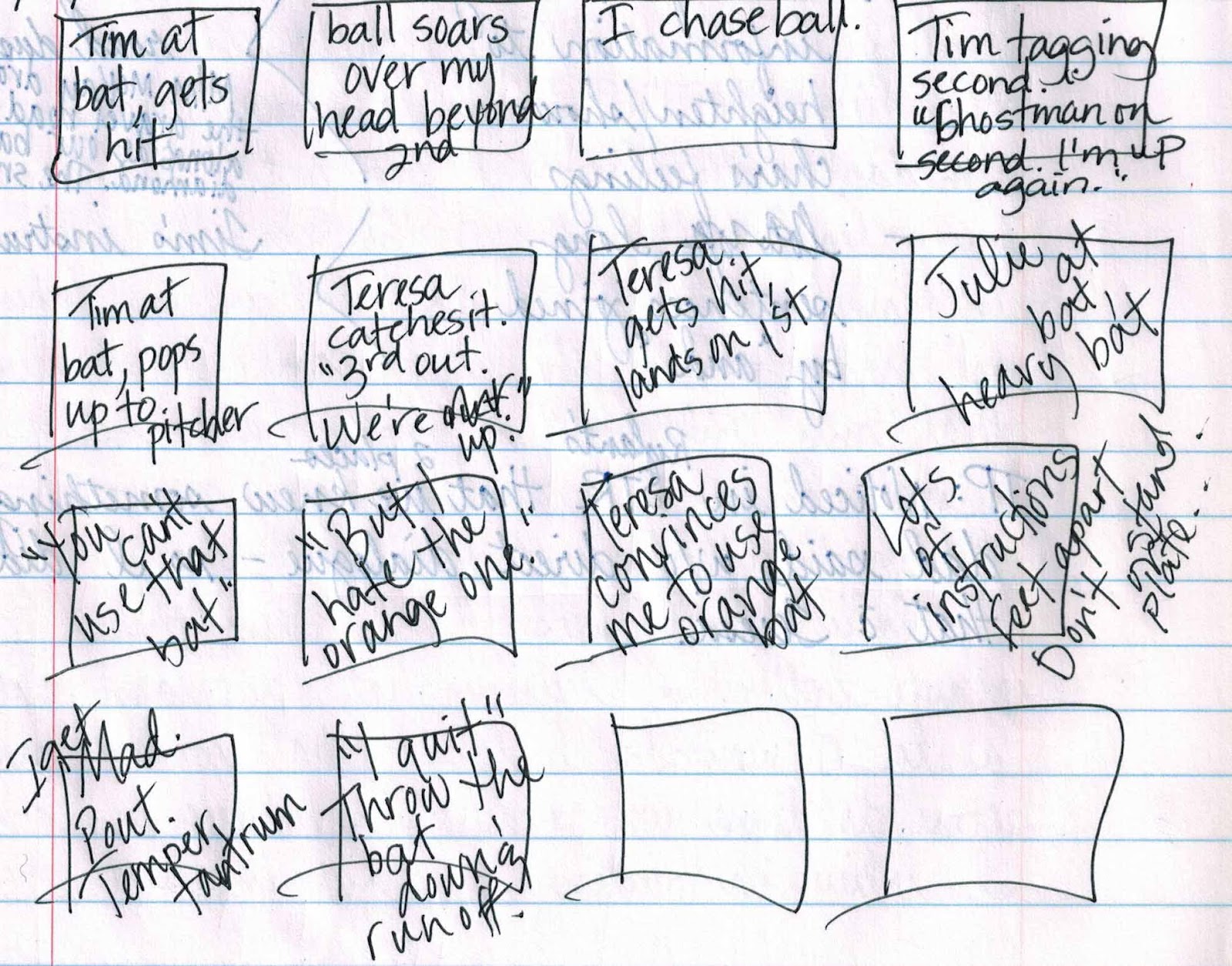
I created the story board below after I'd written several times in my notebooks about playing baseball with my brother and sister as kids. My earlier entries were mostly fast writes about my memories of these frequent games, not a specific time/event but a conglomeration of dozens of them. I knew that I'd need to write a more specific scene if I wanted to include this material in my memoir, so I borrowed a strategy I learned from a screenwriter friend. I imagined what an audience might see if watching our typical game on screen. This helped me distill what was important in all those memories into a single scene. 

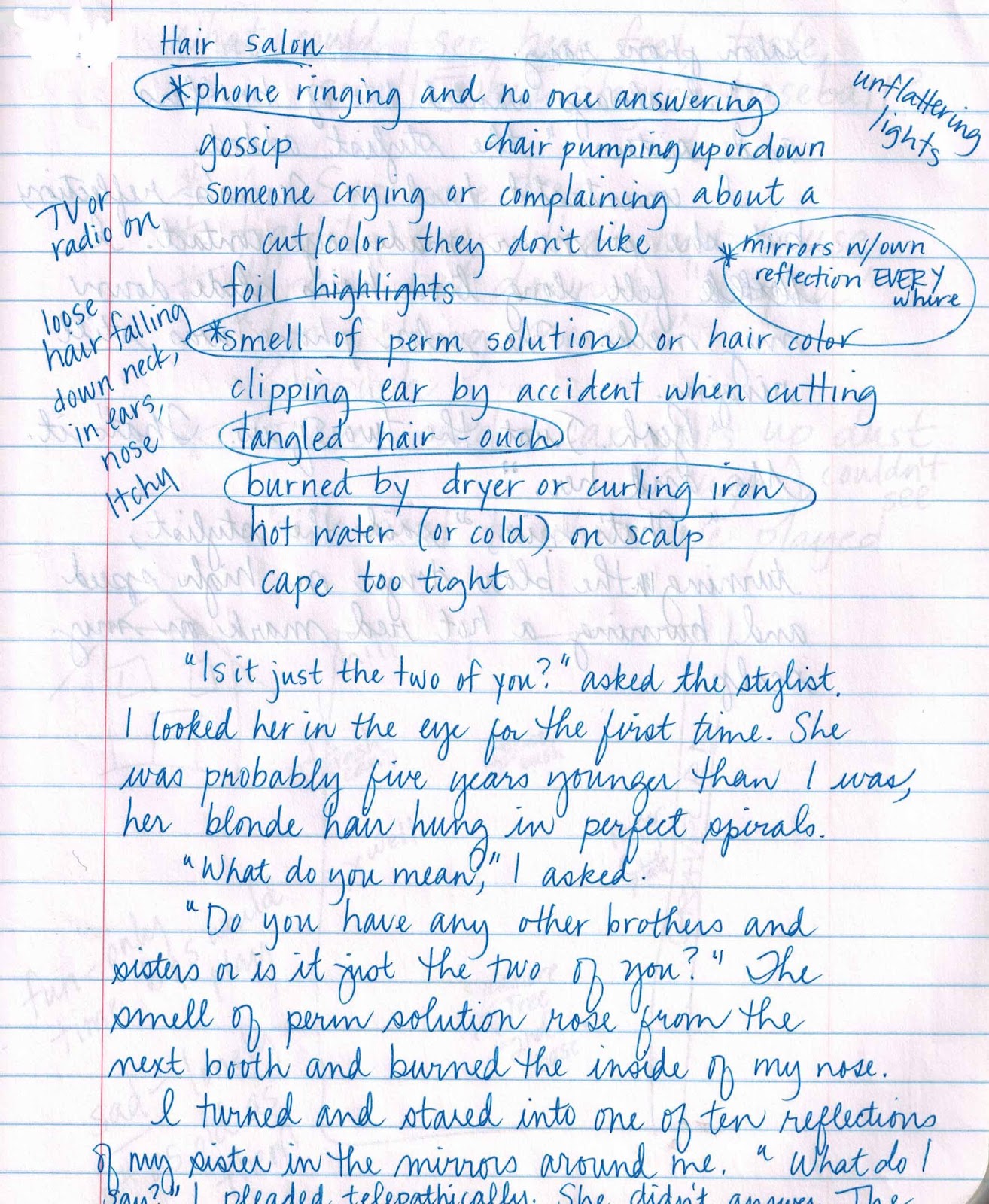
Often my prep for teaching leads to an Aha! moment in my writing. Planning for a typical show-don't-tell lesson for a class, I decided to revise a story about the first time after my brother died that a stranger asked me how many brothers and sisters I had. I didn't know how to answer at the time, and a flood of emotions came rolling in, even as I tried desperately to hide them. I knew from peer feedback that readers were struggling to understand what I felt, but I didn't want to just tell them. So I brainstormed all the sights, sounds, and smells of a hair salon, then identified a handful that were unpleasant and layered them into my story so readers now feel the mild discomforts escalating to real pain as they re-experience that moment with me.


Notebook as Friend, Cheerleader Writing is sometimes emotionally draining for me. So I try to incorporate positive feedback from others into my notebooks whenever possible—love letters to my writerly self, in a sense.

Everyone in my writing group wrote a few words privately to me as part of their facilitated response to a large piece of writing I shared. These are good to re-read when I feel discouraged.

Try It:
Spend two weeks gathering ideas in your notebook by paying close attention to your daily life. Listen for funny or interesting lines of dialogue, record the questions that pop to mind, or note the images you don't want to forget. Then, set a "story board appointment" for a few weeks later—I mean literally write it on your calendar so you remember and set aside the time to do it. On that day, thumb through your notebook and find something to story board. It can be something you noticed during your two weeks or something else, even something from a very old notebook.

Julie Patterson is an adjunct professor of English at Indiana University Purdue University Indianapolis and writer-in-residence for the Indiana Partnership for Young Writers. Visit her at her website or on Twitter at @julie_patter. 

Julie has generously offered to give away a copy of one of her favorite anthologies of student writing - LISTENING STILL - published by the Indiana Partnership for Young Writers. LISTENING STILL is the sixth anthology of writing by students in grades K-8 collected by the Indiana Partnership for Young Writers and co-edited by Julie Patterson. The book showcases work in a variety of genres, including many texts where authors intentionally break conventions to challenge assumptions about what's normal, right, or good. Each chapter features complementary artwork by Michele Wood, Coretta Scott King Award-winning illustrator of I SEE THE RHYTHM. Please comment by January 1 to be entered into this giveaway!


Please know that Sharing Our Notebooks welcomes all kinds of notebook keepers - of any age and interest - to open up their pages and share their process.  At the present time, I am accepting all notebook entries and am especially hoping to receive some entries from boys and men who keep any kind of notebooks.  If you are interested in writing in this space, please contact me, Amy, directly.  I welcome you!

Please share a comment below if you wish.
Monday, June 5, 2017

Linda Rief: Keeping a Notebook Makes Me Pay Attention

Notebook Shelf

Don Murray used to carry around laminated cards about the size of a bookmark, that said, “Nulla Dies Sine Linea—Never a Day Without a Line.” He gave them to anyone and everyone who asked him about writing. It was his mantra—and the most important advice he gave to all of us, the reminder to put our thinking down every day, or it would slip away.

Every day Don wrote in his daybook. “The most valuable writing tool I have is my daybook… All the writing in the daybook is a form of talking to myself, a way of thinking on paper….The daybook stimulates my thinking, helps me make use of those small fragments of time that on many days is all the time I have to write. There is no sign of struggle. I’m not fighting writing. I’m playing with writing. …The daybook also keeps my writing muscles in condition; it lets me know what I’m concerned with making into writing; it increases my productivity….(it’s a place) where you can do all the bad writing and bad thinking that are essential for those moments of insight that produce good writing.”

Influenced by Don, I keep a Writer-Reader Notebook. I have more than 25 years worth now, and I can trace every piece of writing I have ever done either personally or professionally, to these notebooks. I admit that I don’t write in my notebook every day —and I realize so many things I wanted to remember are gone. Still, what I have, gives me a lot from which to work and with which to play.

Every note I have ever taken at a workshop or conference, every passage I have wanted to remember from books I am reading, and all the pictures, sketches, and random notes I just didn’t want to forget, reside in these notebooks. The notebooks hold the nuggets of ideas I have saved that help me remember my thinking. In most instances I have no idea where or when I will use some of this writing, some of these sketches, or some of these professional notes, but they are there waiting patiently for the right moment—the moment when I need them.

I have moved from lined spiral-bound notebooks to large bound notebooks with blank pages. These work best for me—inviting sketching and leaving me room to set up the page in any way I choose. 

My students are prominent in my notebooks. My grandchildren have crawled, toddled and walked their way in also.

As we were watching the Anne Frank movie in class, I was sitting behind my students, watching how reverent and shocked they were throughout this movie. 

Sketch of Students
(Click to Enlarge)

On my oldest grandson’s graduation from high school I found pictures of him picking apples at our house, wanting to remember those little hands that have now become those of a young man. 

Photos of Hunter
(Click to Enlarge)

I have been teaching myself drawing—practicing what I read in journaling and sketching books. What have I learned, just like writing—practice, practice, practice--the more I sketch, the better it becomes. Sometimes the sketches lead to writing. Other times they simply allow me to slow down, take a breath.

I sketched Rye Ledges on a marine biology field trip with our students after several years of trying to get rocks looking like rocks. 

Postcard of Rocks
(Click to Enlarge)

Sketch of Rye Ledges
(Click to Enlarge)

As I was working at my computer one day I watched a squirrel at our bird feeder, grabbed my notebook, sketched and wrote. 

Bird Feeder

I ask students to sketch their thinking as readers and do it myself when the book creates images in my head. As I was reading The Great Gatsby I wrote out my frustration. 

Joy Sketch
(Click to Enlarge)

Reading A Separate Peace, there were so many passages I wanted to capture that I thought they had to be written on that tree I kept imagining. 

Tree
(Click to Enlarge)

And as we were reading and discussing “Nothing Gold Can Stay” from The Outsiders I kept thinking about how quickly the years go by and put together my thinking with images and writing from being a grandchild to watching my grandchildren. 

Circle of Life
(Click to Enlarge)

Painting & Reflection
(Click to Enlarge)

When I go to conferences and workshops I take notes in this notebook. Sketch notes from a workshop with Kylene Beers and Bob Probst last December in Maine. 


Workshop Sketch Notes
(Click to Enlarge)

Penny Kittle and I gave a presentation at the New England Reading Association. She asked us to draw our hands after showing Sarah Kay on YouTube saying her poem “Hands.” This has stimulated lots of stories for me, some of which have become longer pieces. 

Sketch Notes, Hand
(Click to Enlarge)

And what are the last two pages in my current notebook? An article cut from the newspaper pasted into my notebook with notes from Anthony Doerr after hearing him speak at the Portsmouth Music Hall, written in April. The cover of the latest book from one of my former students, Abby Carroll, and notes from her reading. Then nothing—until two emails from today that I did not want to forget. Jotted down—and dated. So much to remember.

Anthony Doerr Notes
(Click to Enlarge)

Book Cover, Notes, E-Mails
(Click to Enlarge)

One of the greatest pleasures of keeping a Writing-Reading Notebook, and asking students to keep one also, comes from hearing from one of them every now and then. Four years after having Lil in 8th grade, and having heard nothing from her for four years, I received this email:

Wednesday, January 17   9:51 PM

“Mrs. Rief,  I counted my journals tonight. I have written 21 since eighth grade. Thank you!”  Sincerely, Lil”

Keeping a notebook makes me pay attention to the world. It slows me down. It lets me breathe. It makes me a deeper listener, a stronger observer. It lets me think. It captures what I want to remember. It gives me a place to think, and think again.

Here's something to try.  Watch “Hands” by Sarah Kay on YouTube. Then, read the text of "Hands." Ask the students (I would suggest 8th grade and higher) to find a line they like and write off that line for several minutes. At another time they could trace their hand, as I have done and put some dash facts on each finger that remind them of a story that has to do with hands, as I did. They can go back to any of these pieces and extend the quick write to a more developed piece. This summer, carry your notebook with you. Sit in front of a painting at a museum and sketch it. Take it to the beach, sit by the lake or ocean and sketch what you see, write what you are thinking.


Linda Rief is the author or coeditor of five Heinemann titles, including Inside the Writer's-Reader's Notebook, The Writer's-Reader's Notebook, Adolescent Literacy, Vision and Voice, and Seeking Diversity , as well as the author of 100 Quickwrites. She is an eighth-grade teacher at Oyster River Middle School in Durham, New Hampshire, and an instructor in the University of New Hampshire's Summer Literacy Institute. She is also a national and international consultant on issues of adolescent literacy. In 2000 she was the recipient of NCTE's Edwin A. Hoey Award for Outstanding Middle School Educator in the English/Language Arts. Her classroom was featured in the series Making Meaning in Literature produced by Maryland Public Television for Annenberg/CPB. 

Linda and Heinemann are generously offering 2 giveaway books, so we will have two winning commenters on this post. Please leave your comment by Thursday, July 29, 2017 to be entered into a drawing for one of two of Linda's books: Inside the Reader's Writer's Notebooks or Read, Write, Teach.  I will announce the winners in this space on Friday, July 30, 2017 as well as on Twitter and at The Poem Farm Facebook page.

Inside the Writer's-Reader's Notebook pack

Read Write Teach

Please know that Sharing Our Notebooks welcomes all kinds of notebook keepers - of any age and interest - to open up their pages and share their process.  At the present time, I am accepting all notebook entries and am especially hoping to receive some entries from boys and men who keep any kind of notebooks.  If you are interested in writing in this space, please contact me, Amy, directly.  I took a little break from this blog to write Poems Are Teachers: How Studying Poetry Strengthens Writing in All Genres (Heinemann, Fall 2017)...but I'm back and welcome you!

Please share a comment below if you wish.
Monday, October 24, 2016

Tim Needles: I Begin Each Page With An Open Mind


I’ve lived most of my life attached to a sketchbook.  As an artist and writer I’ve found my creative process has evolved over the years but it nearly always begins in the book.  I have a closet full of sketchbooks from the last 20 years.  I’ve digitized a few pages from a selection of books and posted a few on my website but for the most part these pages are for me and are generally only seen by my art students, a few select friends and acquaintances.  As an artist I feel that these books may represent the most pure artistic creations I’ve made and are some of my greatest successes as an artist.  The irony is that these books are rarely seen and have no audience.


I like thicker, heavy paper so I use Canson sketchbooks and keep a few pieces of scrap paper underneath a page as I work on it for notes and to prevent bleeding.  I also use smaller Moleskin watercolor sketchbooks for when I travel or when I’m temporarily between books.  I often complete the 108 pages in under a month but in general I use a book between 1-3 months.  I also will film my creative process in creating work with short videos and share it via social media.


I write, draw, take notes, and paint in my book daily and I’ve been working in them so long my process itself has become something of a meditation.  I’ll write down and sketch out ideas, paint over it, glue, layer, collage, and see what happens.  I use words and images but the two often meld together and I let the work choose it’s own direction.  I often begin without any set idea or intention by putting a pen or brush to the page.  I’ve become confident in this practice that once may have caused doubt or fear.


I work each page until I feel satisfied, whether it’s complete or not.  The more I work the less I try to control the process.  I begin each page with an open mind and no idea of what I’m going to do.  Over the years I’ve noticed certain trends and I understand that my work has some fluidity but I try to push it further and innovate.Most of all I create for myself. As an artist I try to be authentic, in the moment, and enjoy the process of making art.


I also participated in the sketchbook project last year and that book which was focused on creating portraits each day throughout the month of October is available to view online.  The video below shows the process of creating one of the pages.  The project asks artist and writers to create a sketchbook with a theme that can be shared online and housed in their headquarters at the Brooklyn Art Library in Williamsburg, NY.  You can learn more about it here at The Sketchbook Project.


My philosophy is that every day is another opportunity to be creative.  I began drawing and writing for myself and that is what I try to do each day.  I think creating art in any form is a wonderful thing.  As an educator I encourage everyone to create and find what gives you a sense of meaning and let it be a beacon in your work.  Don’t worry about your audience, create first for yourself.  The most important advice I give to my students is simply to work, regularly and diligently- each day if possible, it is the only universal secret to success.

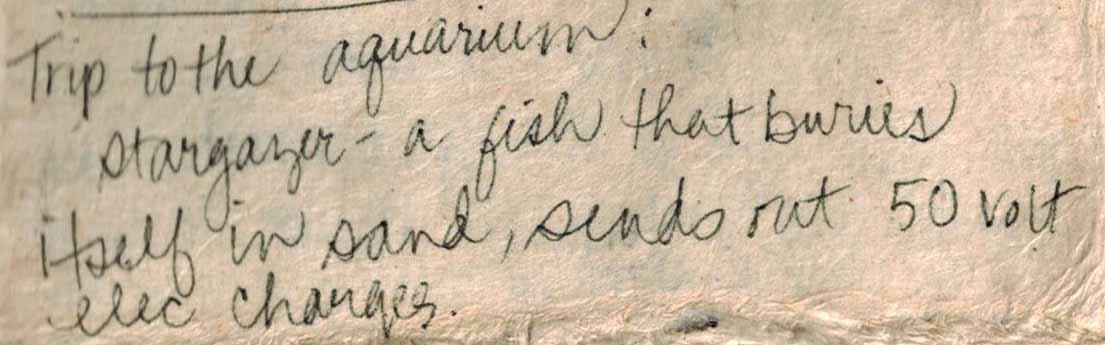
Creative Challenge: Use this image from my sketchbook as a writing or art prompt. If you want to share it via social media add the hashtag #terpart which I use for my annual month of creative challenges.  This is an ongoing challenge, so you may share at any time.


Tim Needles is an artist, writer, performer, and educator from Port Jefferson, NY.  He has been teaching art and media at Smithtown School District in NY for 17 years as well as working as an Adobe Education Leader, a PBS digital innovator, an educational consultant for The Japan Society, and as an adjunct college professor.  His work has been featured on NPR as well as in The New York Times, the Columbus Museum of Art, SVA Gallery, the Talks With Teachers podcast, and LitReactor.  He is also the recipient of the National Art Educators Association AET Outstanding Teaching award and the Robert Rauschenberg Power of Art award at the National Gallery of Art.  He is active on social media guest hosting education chats and sharing his thoughts on arts and education-you can find him at TimNeedlesArt on Facebook or @timneedles on Twitter and Instagram. You can view a few pages and covers of some of Tim's sketchbooks at his website, Tim Needles.

Sharing Our Notebooks is offering a giveaway of a book Tim recommends - SHOW YOUR WORK! by Austin Kleon - for a reader of this post.  Please leave a comment by Sunday, November 20 to be entered into this random drawing.  Please be sure to leave a way to contact you in your comment as well.


Please know that Sharing Our Notebooks welcomes all kinds of notebook keepers - of any age and interest - to open up their pages and share their process.  At the present time, I am accepting all notebook entries and am especially hoping to receive some entries from boys and men who keep any kind of notebooks.  If you are interested in writing in this space, please contact me, Amy, directly.

Please share a comment below if you wish.